
Mohua return to the Mātakitaki/Matukituki Valley
Share this page
-
After decades of silence, the bright song of the mohua/yellowhead has returned to the forests of the Mātakitaki/Matukituki Valley in Mt Aspiring National Park. Once abundant across the South Island, mohua numbers fell sharply due to habitat loss and introduced predators. Their reestablishment here is the result of years of planning, predator control and collaboration by Ngāi Tahu, the Matukituki Charitable Trust, the Department of Conservation’s Mohua Recovery Group, Southern Lakes Sanctuary, the Mohua Charitable Trust, local landowners and volunteers.
The process behind the release
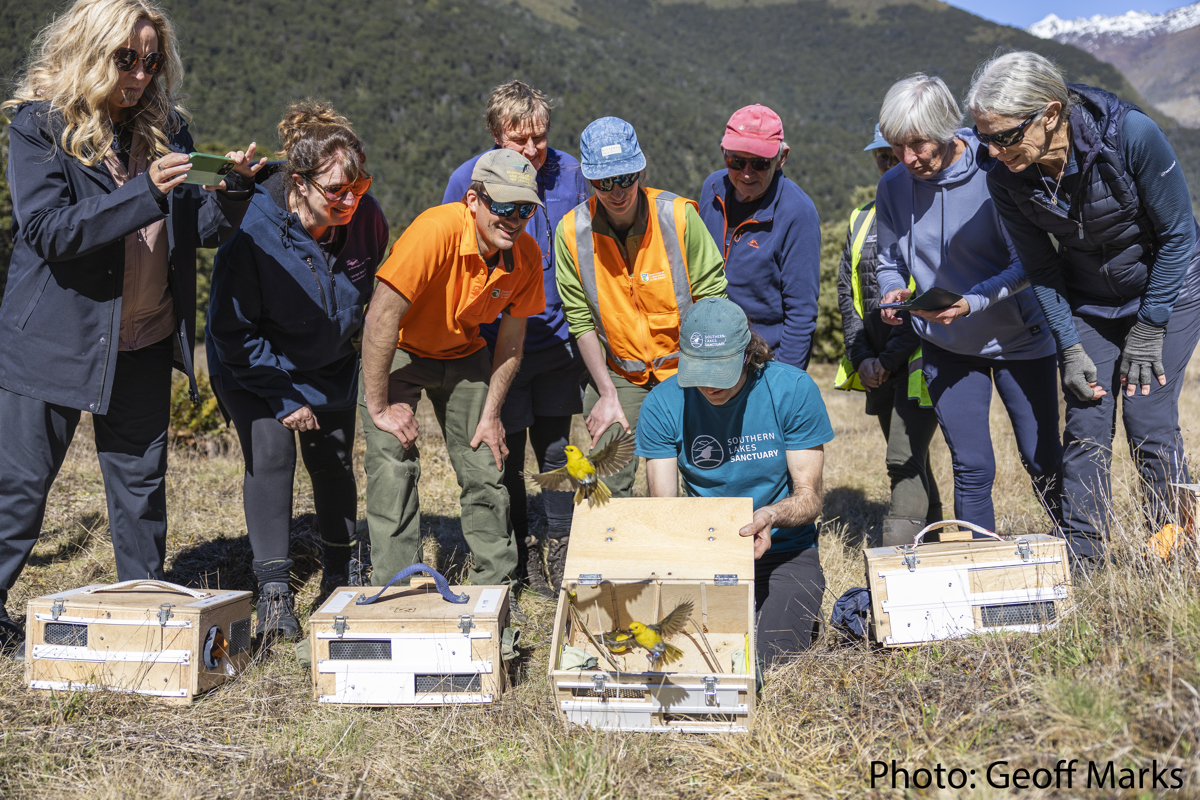
On 14 October, a team carefully captured 50 mohua on Pukenui (Anchor Island) in Fiordland, one of the species’ strongholds. The birds were flown by helicopter to the West Mātakitaki/Matukituki Valley and released near Aspiring Hut just ahead of the breeding season, giving them the best chance to settle, establish territories, and begin nesting.
-

-
Learning from the robin
The mohua release builds on the success of an earlier reintroduction of the kakaruwai/South Island Robin. Robins were among the first species to benefit from intensive predator control in the valley, and their thriving populations proved that restored habitat could support native birds once again. Mohua, like kakaruwai, are vulnerable to predation, but the robin’s success gave conservationists confidence that the valley was ready for this next step.
Monitoring the future
The release is only the beginning. Over the coming years, Southern Lakes Sanctuary and the Matukituki Charitable Trust will continue intensive monitoring to track how the mohua adapt to this new site. Ongoing predator control will remain essential, with trap lines and bait stations maintained to keep stoats and rats at bay. This long-term monitoring will provide the data needed to understand how the birds are faring and to guide future releases, ensuring the valley becomes a secure stronghold for mohua and other native species.
Why it matters
The mohua’s return is more than symbolic. It demonstrates how collective effort (iwi, DOC, community groups, volunteers, council partners, and landowners) can reverse biodiversity decline. For QLDC, it’s a living example of the Climate and Biodiversity Plan (2025–28) in action: strengthening biodiversity corridors, building ecological resilience, and connecting people to the outcomes of shared mahi.
As summer continues, the sight and sound of mohua in the Mātakitaki/Matukituki Valley is a reminder of what’s possible when guardianship, volunteer commitment, and long-term monitoring come together.